Contenidos del artículo:
The digitization of Occupational Risk Prevention (ORP) has become a necessity for companies seeking to optimize the safety of their employees and comply with current regulations. The use of an ORP software allows centralizing risk management, automating administrative tasks and ensuring legal compliance in occupational health and safety. This solution improves efficiency, reduces errors and ensures a safer working environment in any productive sector, from industry to construction.

What is PRL software and how does it work?
A PRL software is a digital tool designed to help companies to comprehensively manage all aspects related to occupational risk prevention. This type of solution allows:
- Identify and evaluate risks in real time.
- Manage prevention plans and corrective actions.
- Control the training of personnel in security matters.
- Automate the generation of reports and mandatory documentation.

In areas with high industrial or construction activity, implementing an ORP software has become a common practice to optimize resources and ensure compliance in an automated way.
Advantages of digitizing occupational risk prevention
Increased efficiency and time savings
Digitizing ORP significantly reduces the time spent on administrative tasks, such as reporting and internal audit follow-up. Thanks to the PRL software, these processes are automated, allowing prevention technicians to concentrate on strategic actions and continuous improvement.
Improved regulatory compliance
The use of specialized software facilitates the control of documentation required by legislation, such as risk assessments, action plans and training certificates. In this way, the company is always prepared for external audits or work inspections, minimizing legal risks and sanctions.
Traceability and total control
Thanks to digitization, it is possible to track in detail all the preventive actions implemented. From initial assessments to incident resolution, the PRL software provides a complete history of each worker and workstation.
4. Improvement of the preventive culture
Having a platform that makes risks and preventive actions visible reinforces employee awareness and fosters a safer organizational culture. In addition, it allows all levels of the company to be involved in the active management of ORP.
5. Adaptation to multi-center environments and teleworking.
Companies with multiple sites or remote teams can especially benefit from cloud-based PRL software, which enables centralized management regardless of location. This is especially relevant for companies with operations in different locations.
Would you like to see how Prodity digitizes your risk assessments?
What should a good PRL software have?
When choosing a solution for digitizing the PRL, it is important to consider:
- Usability: an intuitive interface that facilitates daily use.
- Modularity: scalable functionalities according to the size of the company.
- Integration: ability to connect with other systems (ERP, HR, etc.).
- Up-to-date legal compliance – keeping regulations up to date.
In addition, technical support and user training are key factors for a successful implementation.
How to Choose Occupational Safety and Health Software Based on Your Industry
The basic requirements are the same for any company: risk assessment, preventive measures, documentation, and traceability. What varies from one industry to another is which aspect plays a greater role in your day-to-day work. Before comparing tools, see which of these profiles most closely matches your own.
Industry and Manufacturing
Typical tasks here include managing many workstations, performing machinery maintenance, and conducting risk assessments that must be reviewed whenever a process changes. Look for software that allows you to easily repeat and update risk assessments and that records inspections and observations paperlessly.
Construction
The chain of contractors and subcontractors is key. You need to monitor which companies and workers have access to the construction site and what documentation they have, in addition to complying with industry-specific regulations (Law 32/2006 on subcontracting). Prioritize the coordination of business activities and the management of third-party documentation. If you’d like to learn more, check out the CAE guide.
Chemistry, Energy, and Environments with Hazardous Atmospheres
Hot work, confined spaces, or ATEX zones require prior authorization. Choose software with work permit management that provides a clear record of who authorizes, when, and under what conditions.
Logistics and Warehousing
There is a high turnover of staff and transportation companies coming onto your premises. The training of each employee, access control for third parties, and the ability to quickly report incidents via cell phone are all key priorities.
If you work in multiple sectors or facilities
Choose a customizable platform that lets you tailor forms and workflows to each facility without relying on the provider, and that consolidates data into a single dashboard. If you need to start with assessments, check out the risk assessment module.
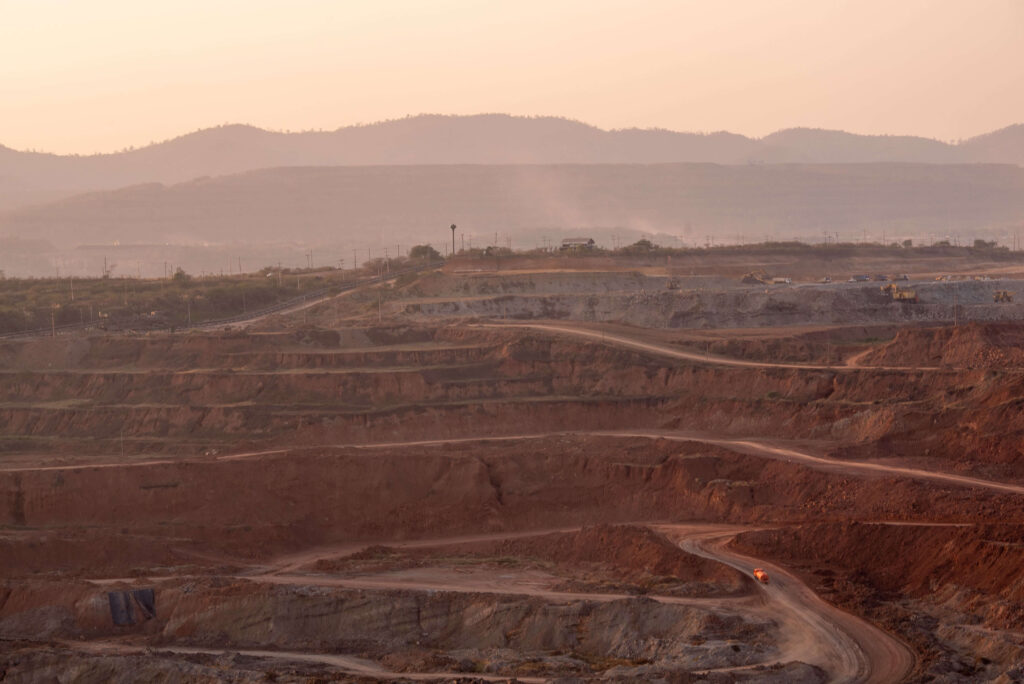
Mining and Quarrying
The risk here is high, and the regulations are specific to the industry: documentation is submitted to the mining authority, and work is organized into shifts, often in remote locations and involving many contractors. Look for software that allows you to:
- Manage mining safety documentation and keep it ready for an inspection.
- Record and analyze incidents and failures, ensuring traceability of corrective actions.
- Monitor contractors and subcontractors: who is allowed in, what training they have, and what documentation they provide.
- Monitor fatigue and work shifts, which are a common risk factor in mining operations. You can find more details in our guide on fatigue and risk in mining.
If you operate in Chile, the relevant regulation is DS 132, and oversight is provided by Sernageomin. We explain this in the practical guide to DS 132. In Spain, mining activities are governed by the General Regulation on Basic Mining Safety Standards and Royal Decree 1389/1997.
Always ask yourself these questions before making a decision: Can a field technician use it on their cell phone? Does it fit my processes, or does it force me to adapt? Does it notify me of deadlines and pending tasks? How long does it take to become operational?
Transforma tus datos EHSQ & ESG en insights accionables con nuestra IA
Conclusion: why digitizing ORP is a safe investment
Investing in an ORP software not only reduces costs in the medium term, but also improves the quality of the work environment and reinforces the company’s commitment to the health and safety of its employees. In an increasingly demanding legal environment, digitizing OHS management is no longer an option, but a logical step to ensure compliance and increase competitiveness.
If you are looking for an advanced, flexible tool adapted to the real needs of your company, we invite you to discover Prodity Software, an innovative solution designed to transform occupational risk prevention into an efficient, automated process aligned with the most demanding market standards.
They already trust Prodity…

Related articles
- Digital work permit management: more control and less human error
- Digitizing work permits: less paper, more traceability and security
How much does occupational safety and health software cost?
The price depends on the number of locations and users, as well as the modules you need (risk assessments, CAE, work permits, training, etc.). At Prodity, our occupational risk prevention software is modular: you only pay for what you use, and you can expand it as your business grows. Request a demo, and we’ll put together a customized proposal for you.
How long does it take to implement occupational safety and health software?
It depends on the scope, but a phased rollout allows you to start working with the priority modules within the first few weeks. Prodity includes support during implementation, migration of your current data (Excel, existing documentation), and user training.
Does the occupational health and safety software integrate with my ERP or HR system?
Prodity connects with other corporate systems (ERP, HR, payroll, etc.) to synchronize employee information, job titles, and locations, thereby preventing data duplication. During the demo, we’ll review the integrations you need with you.
What does artificial intelligence bring to occupational risk prevention software?
Prodity’s AI agents automate tasks such as logging events via WhatsApp, generating action plans in seconds, or querying your data using natural language. This reduces the time spent analyzing Preventive Safety Observations (PSOs) by 93%. Discover how Prodity’s AI works.
Are you comparing Prodity with other PRL or EHSQ software?
If your team is evaluating several platforms before making a decision, here is a comprehensive analysis of each one: alternatives to Sphera, alternatives to Intelex, alternatives to Enablon, alternatives to VelocityEHS, alternatives to Cority, alternatives to Zyght, and alternatives to SafetyCulture.
In every case, the underlying question is the same: Does the occupational safety software adapt to the way you manage risk prevention, or do you have to adapt to it? In the demo, we’ll walk you through the platform with your specific processes front and center (your facilities, your risk assessments, your contractors) so you can see exactly how it fits—regardless of your company’s size or which alternative you’re considering.