

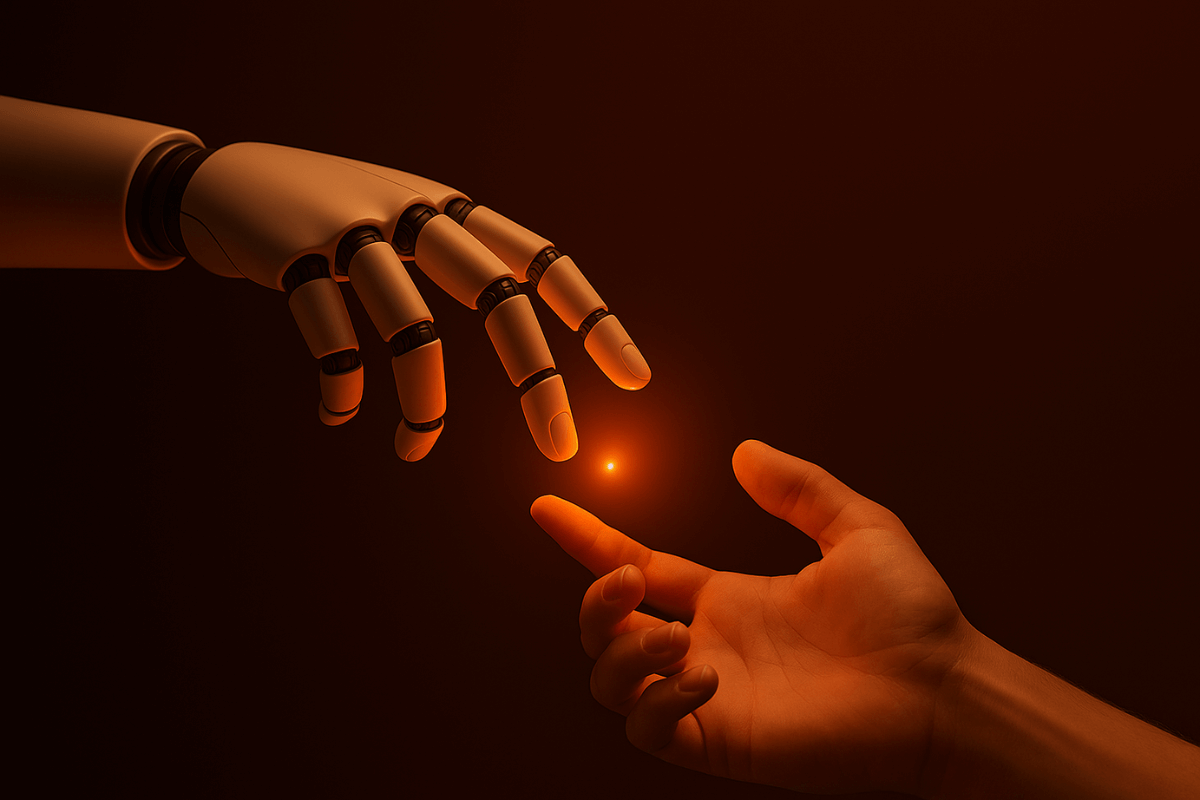
In recent years, artificial intelligence (AI) has gone from being a technological trend to become an essential tool for preventive management.
In the field of Occupational Safety and Health (OSH), its impact is clear: it anticipates risks, reduces incidents and optimizes resources, promoting a more proactive, agile and connected safety culture.
Artificial intelligence is no longer a future promise
AI is no longer a promise of the future: it is a reality that transforms preventive management.
Today, it can anticipate occupational risks before they occur, by detecting invisible patterns, processing thousands of data in seconds and alerting about failures even before they manifest themselves.
Thus, it goes from being a reactive tool to become a predictive ally, with a direct impact on occupational safety.
AI that identifies hazards before they become visible
Every day, companies generate huge volumes of data:
- Sensors in machinery
- Human behavior reports
- Maintenance records
- Environmental conditions
A well-trained AI can detect combinations of variables that, although they may not seem alarming on their own, anticipate an incident.
For example, an operator with long shifts using a machine with irregular vibrations could be in an imminent risk situation.
AI analyzes these factors in real time, detects the pattern and launches an automated alert.
What is surprising is not that it helps prevent accidents, but that it does so before personnel notice them.
Generation of suggestions for improvement
Prodity’ s artificial intelligence not only detects risks: it also proposes concrete actions to avoid them.
IA Scout: from data analysis to preventive action
Once a pattern or hazard is identified, IA Scout analyzes:
- Historical data
- Environmental conditions
- Industry best practices
With this information, it generates personalized recommendations that are converted into preventive actions automatically assigned to the corresponding responsible parties, with integrated traceability and follow-up.
In addition, the system issues proactive alerts in real time, helping to make faster and safer decisions.
Thus, prevention ceases to be reactive and becomes a predictive and strategic management, capable of anticipating problems before they impact people or the operation.

Automatic report generation
With Prodity’s AI, transforming large volumes of data into useful information is no longer a challenge.
Reports ready to share and customize
The system generates structured reports automatically, with key tables, graphs and summaries ready to share or present.
Main advantages:
- Download in editable formats such as Word or Excel
- Adaptation by work center, type of incident or criticality level
- Request for customized reports in natural language
- Access to real-time interactive dashboards
All designed to facilitate decision making at different levels of the organization.

Intelligent automation of prevention
AI doesn’t just predict: it also organizes information to help teams act quickly and efficiently.
Immediate action with automated data
Among its main capabilities:
- Classifies risks by priority level
- Suggests corrective actions
- Automatically documents findings
The result is clear: less operational burden, more agility and more time to focus on what’s important – avoiding accidents and taking care of people.
Fewer incidents, more preventive culture
Adopt AI in the management of PRL MANAGEMENT not only reduces incidents: it transforms the safety culture.
Teams stop reacting to problems and start anticipating them, guided by objective data.
This strengthens trust in management, improves the work environment and facilitates regulatory compliance.
When AI drives digital prevention management
Solutions such as Prodity Software ‘s integrate these predictive models directly into preventive management systems.
Modular integration and real-time decisions
Its modular approach allows:
- Monitor and record incidents
- Activate automatic protocols
- Turning data into immediate security decisions
AI does not replace the prevention team: it makes it stronger, faster and more accurate.
Frequently Asked Questions (FAQs)
1. Does AI replace the ORP technician?
No. AI complements your work, helping you to better prioritize, anticipate risks and make more informed decisions.
2. What kind of data does AI need to function?
Incident history, environmental data, equipment sensors, maintenance records, shifts and other key safety indicators.
3. Can it be applied in any industry?
Yes, AI is adaptable to sectors such as construction, industry, logistics, mining and healthcare. Only the type of data it analyzes varies.
4. What direct benefits does it offer?
- Reduction of accidents
- Optimization of preventive resources
- Improved legal compliance
- Strengthening the safety culture
5. How does AI anticipate occupational hazards?
It analyzes data in real time, detects risk patterns and launches alerts before an incident occurs.
In a work environment where every second counts, anticipating before reacting can save lives. Artificial intelligence is not just technology: it is a new way of thinking about prevention. Companies like Prodity Software are leading this change by offering management platforms that integrate AI to anticipate occupational risks before they occur. Thus, safety becomes a living, intelligent process that is strategically connected to the future.