

Artificial intelligence has been installed in our daily lives, inside and outside of work, being consciously or unconsciously exposed to the stimuli of this technology. But when we go down to day-to-day operations, a stark contrast appears:
Are we really taking advantage of AI… or are we still in shallow adoption?
Many organizations have taken initial steps: basic automations, limited pilots or tools that sort through data without much context. But they are still far from the real impact: less bias, faster decisions and more operational time to focus on people.
Why the superficial adoption of this technology is slowing down transformation
Symptoms of a superficial implementation
EHSQ teams live with difficulties that artificial intelligence promised to solve… but which are still there:
- Manual and repetitive analysis of PSO.
- Dispersed data, poorly connected and with little traceability.
- Processes that depend on available time, not criticality.
Thus, the feeling of “moving forward” does not translate into real impact.
What happens when Artificial Intelligence ceases to be superficial
When it goes from being decorative to being integrated into operational flows, the leap is immediate.

The results of the “operational awakening”
- 93% less time in PSO analysis.
- Less bias and greater consistency among observers.
- Automatic patterns that were previously invisible.
- Intelligent prioritization for evidence-based decisions.
- Teams freeing up time to be on the ground and take care of people.
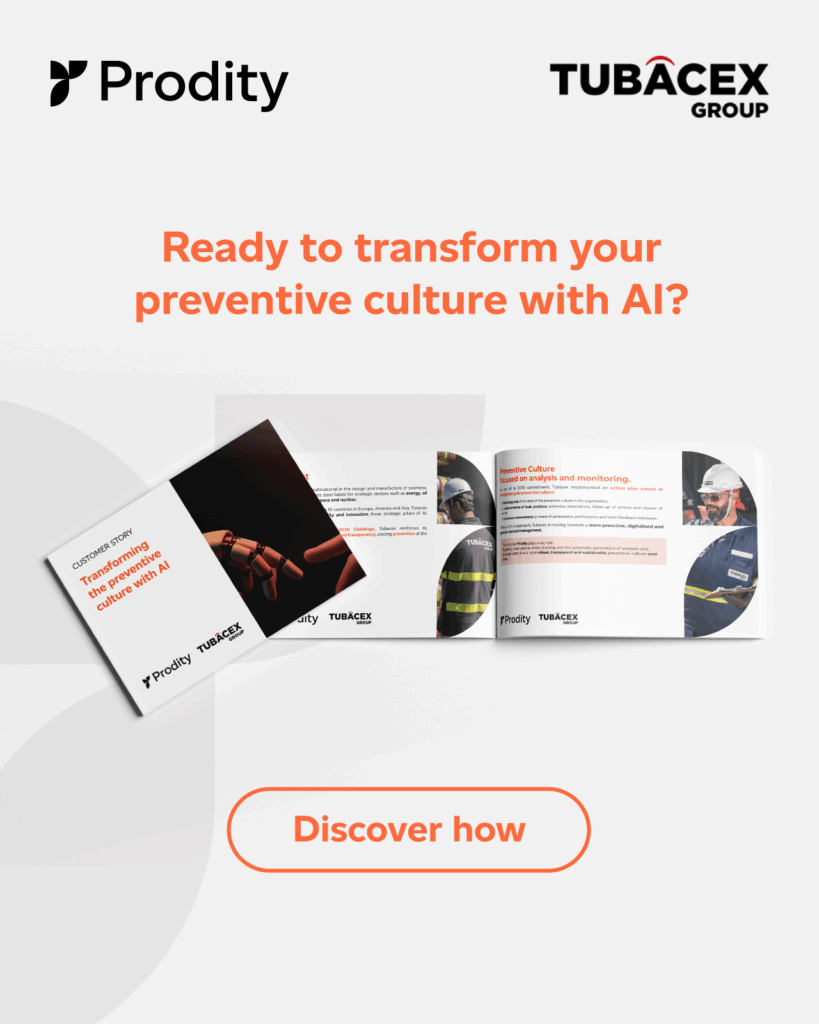
These results are not futuristic: they are already validated, as shown in the Tubacex case.
📄 Download the case study: “How Tubacex reduced PSO analysis time by 93% thanks to AI”.
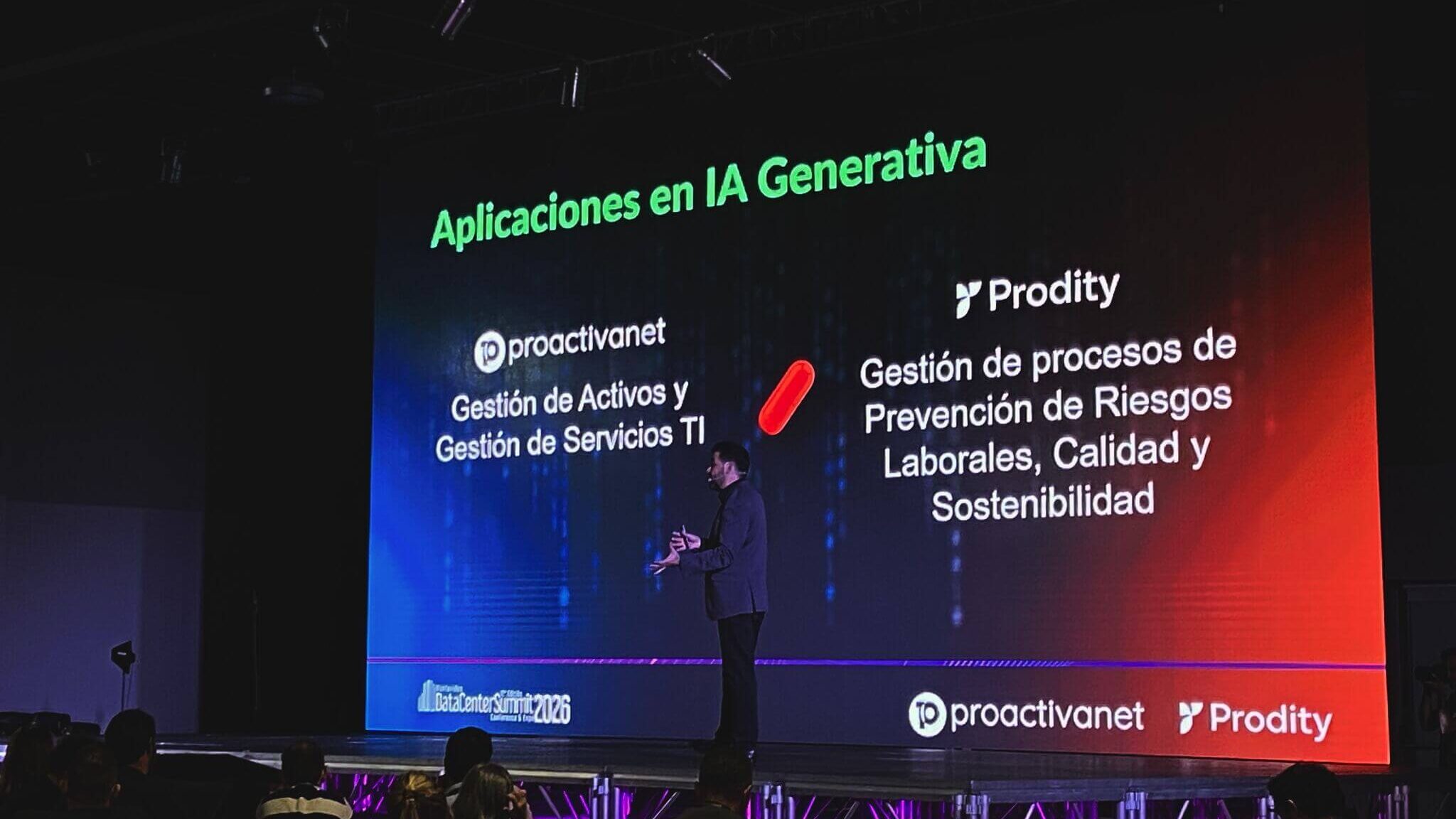
What the Data Center Summit 2026 left us with
A week ago we participated in the Data Center Summit 2026 of our partner Arnaldo Castro and there was a concept that marked the conversation: the awakening.
For the past few years, Generative Artificial Intelligence has lived in a “shallow mode” and it’s time to decide. It was a Matrix moment:
- the blue pill is to stay with manual processes and AI that only serves to generate beautiful images or cooking recipes…
- the red pill is to see the real impact that this technology is already having on EHSQ and ESG: less bias, faster decisions, processes that flow…
Attendees put it bluntly:
the industry is choosing the red pill.
Where Artificial Intelligence is evolving in Safety and Health (OSH)
Everything points to a significant acceleration in the next few months:
AI integrated into real workflows
From PSO to incidents, permits, audits or actions.
AI to reduce bias and improve consistency
Fundamental in organizations with multiple sites and diverse teams.
AI as a knowledge generator
Patterns, risk anticipation and more informed decisions.
AI to reinforce the preventive culture
The objective is not to replace prevention, but to give it time to be effective.
Frequently Asked Questions about AI and ORP (FAQ)
1. How does AI help in the analysis of PSO?
It classifies observations, detects repetitive patterns, reduces biases and can reduce analysis time by up to 93%.
What benefits does AI bring to EHSQ management?
Greater agility, more consistent decisions, fewer manual tasks and more time in the field.
3. Does AI substitute for ORP professionals?
No. AI eliminates repetitive tasks so that teams can focus on analytics, prevention and people care.
4. What differentiates a superficial AI from an operational AI?
The superficial automates isolated tasks; the operational is integrated into complete flows and generates real impact.
5. Where to see a real case of AI in ORP?
In the case of Tubacex, available for download in this article.