


In today’s business environment, managers are faced with a maze of acronyms that, although connected, have vital nuances. Do you really know how to distinguish between QMS, ORP (or OHS), OSH, EHSQ and ESG?
Depending on the country in which you operate, the acronyms change, but the objective is the same: to ensure regulatory compliance and achieve operational excellence. Understanding these differences is critical whether you manage a plant in Madrid or an operation in Santiago de Chile, Mexico City or Bogota.
Below, we break down these concepts and explain how digitization and Artificial Intelligence are the key to unifying your management on a single platform.
What is ORP or OHS and what are its pillars?
What in Spain is known as PRL (Occupational Risk Prevention), in Latin America is usually called SSO (Occupational Safety and Health or SySO).
It encompasses the set of activities and measures to avoid or reduce the risks derived from work. Whether under Law 31/1995 (Spain), NOM (Mexico), Law 29783 (Peru) or Dec. 1072 (Colombia), it is a mandatory legal requirement that demands an exhaustive analysis of physical safety.
For effective management of ORP/OHS, organizations should focus on:
- Risk Matrix (IPERC): Identify hazards and assess their severity in order to propose technical preventive measures and operational controls.
- Accident and Incident Investigation: Going beyond the major accident. Systematically analyzing incidents (including near misses) is vital to attack the root cause and reduce the accident rate.
- PPE / PPE Management: Ensure that each employee receives the appropriate Personal Protective Equipment, with the corresponding record of delivery and training.

Differences between OSH and Industrial Safety: Health vs. Safety
Although often used synonymously, OSH (Occupational Safety and Health) has a broader, international focus, aligned with standards such as ISO 45001.
While Industrial Safety prioritizes the prevention of physical accidents and the care of the facilities, OSH or Occupational Health focuses on the integral wellbeing of the employee, including industrial hygiene and medical surveillance.
Advanced occupational health management involves:
- Occupational Medical Examinations: Management of entry, periodic and retirement medical examinations.
- Epidemiological Surveillance: Monitoring of occupational diseases to reduce absenteeism and detect risks early.
- Data Privacy: Guarantee the confidentiality of medical records by means of software with restricted and secure access.

What is the QMS and why is it key to competitiveness?
The QMS (Quality Management System) focuses exclusively on customer satisfaction and process efficiency. Its most recognized global standard is ISO 9001.
Unlike OHS (people-centered), QMS focuses on the product/service and the customer, managing:
- Process Standardization: Ensure that operations are always performed in the same way to guarantee consistent results.
- Non-Conformities (NC): Management of deviations, complaints and returns to improve the final product.
- Supplier Management: Evaluate and homologate the supply chain to avoid failures in raw materials or external services.

How does the ESG strategy connect to the EHSQ ‘E’?
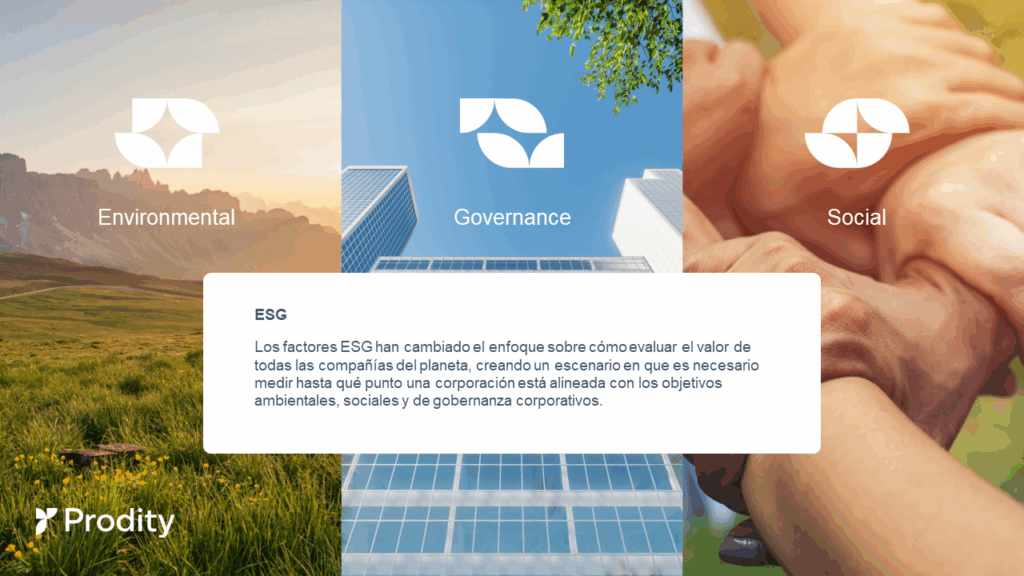
This is one of the most common doubts. ESG(Environmental, Social, and Governance) stands for long-term corporate strategy vis-à-vis investors and society.
It is crucial to understand that the ‘E’ in ESG (Environmental) is the strategic basis that is then operationally executed within the EHSQ system. While ESG defines the “what” we want to achieve (e.g. be carbon neutral by 2030), the management system takes care of the “how” it is carried out in the plant.
A management aligned with ESG criteria allows:
- Driving a green future: Managing waste, emissions and consumption (the operational basis of the environmental factor).
- Strengthen the preventive culture: Employee care is at the heart of the Social (‘S’) factor.
- Making ethical leadership visible: Transparency in decision making (Governance).
The EHSQ / HSEQ approach: Total integration
The term EHSQ(Environment, Health, Safety and Quality) – sometimes called HSEQ or SIG (Sistemas Integrados de Gestión) in Latin America – is the result of adding all the above dimensions together.
It is the “safe” where they converge:
- QMS (Quality).
- SSO/PRL (Safety and Health).
- Environment (The daily execution of the ESG).
In an integrated system, efficiency soars because:
- Real Environmental Management: ESG strategy is translated into daily operational controls (ISO 14001).
- Trinorma Audits: Combined audits can be performed (Quality + Safety + Environment) saving time and resources.
- Centralized Document Management: A single repository for operating procedures, safety standards and environmental policies, ensuring that the operator has all the information in one place.
Prodity: Your one-stop platform for QMS, HSEQ and ESG
Managing Quality, Safety and Sustainability in separate platforms is inefficient. Prodity is the solution that unifies all these dimensions in a flexible, modular and AI-powered platform, adapted to both European and Latin American regulations.
Why choose Prodity?
- Powerful Quality Management Module: Manages ISO 9001, findings, claims and supplier evaluation with fluency.
- Total Centralization: Connect your QMS with Safety (OHS/OSH) and environmental management (ESG) in a single ecosystem.
- Predictive Technology: Anticipate problems before they occur thanks to our advanced AI.
- ESG Strategic Vision: Provides the necessary data for your sustainability and governance reports from day-to-day operations.
Stop struggling with spreadsheets and disconnected systems. Take your company’s quality and preventive culture to the next level.
Ready to transform your corporate management?
Frequently Asked Questions (FAQ) about GIS
Why is it important to digitize the Work Permits?
Digitization simplifies high-risk operations (work at height, hot work, confined spaces). It enables real-time visualization, eliminates paper, ensures correct authorization signatures and facilitates mobile access, even without coverage.
How are corrective actions from different areas (Quality, OHS, Environment) managed?
The ideal is a centralized Findings Manager. Tools such as Prodity integrate findings from audits, accident investigations or inspections into a single repository, allowing a global view of the company’s status.
Does the software help to comply with ISO 9001, 14001 and 45001 standards?
Absolutely. Specialized software standardizes processes, ensures traceability, manages GIS documentation and facilitates data-driven decision making – key requirements for ISO certifications.
Is gamification useful for safety culture?
Yes. Digital act and condition reports (or Preventive Safety Observations) promote safe behaviors and dialogue. By establishing objectives and metrics, you involve the entire chain of command in identifying risks.