

April 28th was World Day for Safety and Health at Work. A day when it is worth asking ourselves: are we using the full potential of technology to protect our people?
Spoiler: AI can be your best ally to anticipate and make better decisions.

A global approach: the ILO and digital transformation in OSH
This year, the International Labor Organization (ILO) chose as its central theme: “Revolutionizing health and safety: the role of AI and digitalization at work”. The message is clear: new technologies are transforming OSH management. From automated tasks to intelligent monitoring, augmented reality to data analytics, prevention is entering a new era.
New challenges are also opening up: the emergence of digital work models, teleworking and the need for rapid adaptation to these changes.
From data to decisions: what can AI do for OSH?
1. Predictive analytics to anticipate risk
AI can identify hidden patterns in historical data, foresee areas or processes at higher risk and help you act before something happens. Thanks to machine learning, it is possible to detect trends, generate automatic alerts and suggest concrete prevention measures. In addition, can analyze real-time videos, for example from a webcam, and detect dangerous situations before an accident materializes.
Intelligent natural language search
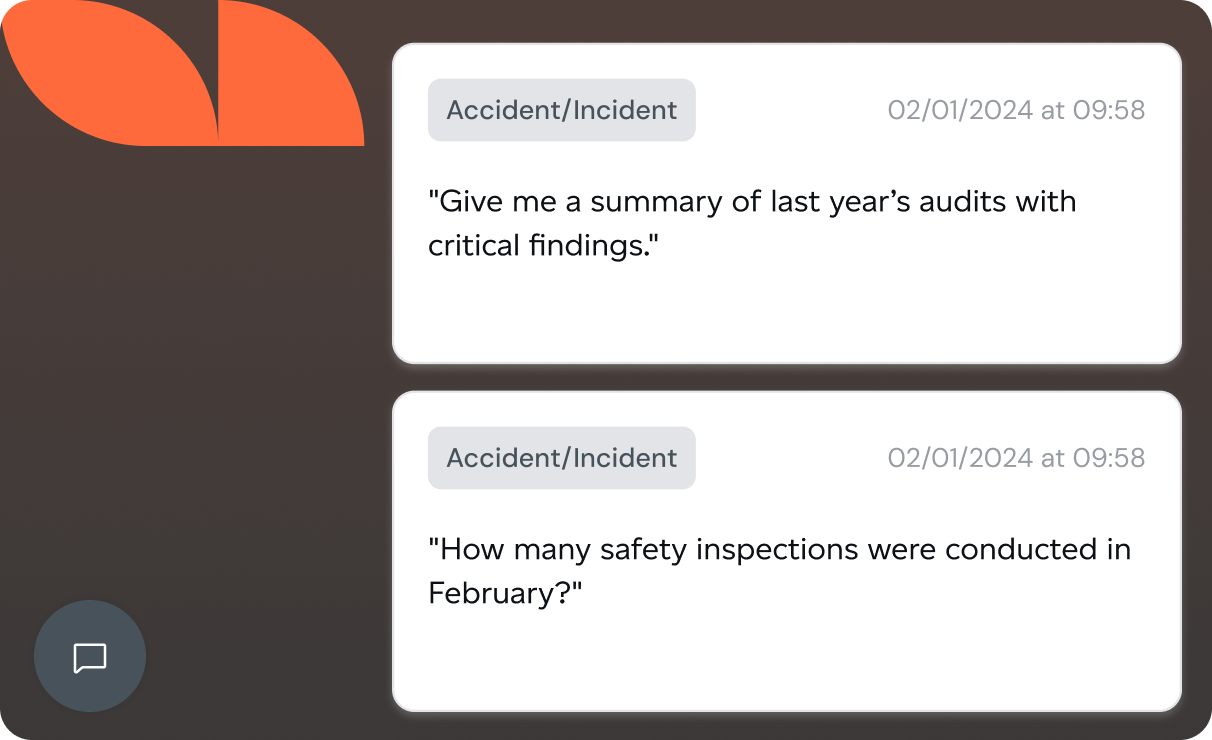
Can you imagine being able to ask your system questions as if you were talking to a colleague?
- “Recorded accident due to hazardous liquid spill in warehouse 2”.
- “How many incidents were reported this week at the Madrid plant?”
- “What critical findings did we have in audits last year?”
With AI, that is already a reality.
Automatic report generation
Forget about wasting hours building reports. Can transform data into reports with tables, graphs and insights, directly in Office format or dashboards ready to present. Just ask for what you need.
4. Proposals for action based on trend analysis
In addition to detecting risks, artificial intelligence can help you design more accurate action plans:
- Analyzes past inspections and audits to detect repeated failures.
- Suggests corrective actions based on what worked in other cases.
- Prioritizes actions according to criticality, location or frequency of risk.
And you, are you already using AI to better protect your team?
The future of prevention is not only more digital, it’s smarter. At Prodity, we are helping companies implement AI solutions to transform their occupational health and safety processes. Today more than ever, data must be used to anticipate, act and protect.